Skip to content

Menopause Beyond Hot Flashes
By Dr. Ramesh Seegobin, M.D. | Posted on July 16, 2026 | Georgetown, Ontario
A Physician‘s Perspective
One of the most common misconceptions I encounter in clinical practice is that menopause is simply a reproductive milestone marked by hot flashes and the end of menstrual cycles.
In reality, many women come to my clinic because they tell me they no longer recognize themselves.
Some describe a persistent mental fog that makes it difficult to concentrate at work. Others explain that despite eating well and exercising regularly, they continue to gain weight—particularly around the abdomen. Many notice that they become anxious more easily, struggle to recover after exercise, wake repeatedly throughout the night, or simply feel as though the energy and vitality they once enjoyed has slowly disappeared.

What strikes me most is that many of these women have already sought medical advice. They’ve often been told that their laboratory work is “normal,” that these changes are simply part of aging, or that they should learn to live with them.
While menopause is a natural biological transition—not a disease—it represents one of the most significant hormonal changes a woman will experience during her lifetime. Estrogen, progesterone, and testosterone influence virtually every organ system. As these hormones decline, the effects extend far beyond the ovaries. The brain, cardiovascular system, skeletal muscle, gastrointestinal tract, immune system, skin, bones, and metabolism all respond to these hormonal changes.
The conversation surrounding menopause has traditionally focused on symptom management. I believe it should instead focus on health optimization.
This stage of life offers an opportunity—not merely to alleviate symptoms—but to preserve cognitive function, maintain muscle mass, reduce chronic inflammation, optimize metabolic health, and improve quality of life for decades to come.
My approach is not simply to ask whether a woman is experiencing hot flashes.
It is to ask a much broader question:
“How can we help you remain healthy, energetic, resilient, and confident throughout the next thirty years of your life?”
Menopause Is Not an Event—It Is a Physiological Transformation
Many people think menopause begins when menstrual periods stop.
From a medical standpoint, menopause is officially diagnosed after twelve consecutive months without menstruation. However, the biological changes begin much earlier.
The transition known as perimenopause may begin five to ten years before the final menstrual period. During this time, ovarian hormone production becomes increasingly unpredictable. Estrogen and progesterone fluctuate dramatically before eventually declining, creating symptoms that can appear inconsistent and difficult to recognize.
This explains why many women tell me:
“Some months I feel completely normal. Other months I feel exhausted, anxious, bloated, and unlike myself.”
These hormonal fluctuations affect far more than reproduction.
Estrogen receptors have been identified throughout the body, including within the:
- Brain
- Heart
- Blood vessels
- Liver
- Skeletal muscle
- Bones
- Skin
- Gastrointestinal tract
- Urinary tract
- Immune system
When estrogen declines, each of these systems begins to adapt.
Understanding menopause therefore requires us to think beyond reproductive health. It is, fundamentally, a transition in whole-body physiology.
The Brain on Menopause
One of the greatest misconceptions surrounding menopause is that cognitive symptoms are “all in your head.”
Ironically, they are—but not in the way many people assume.
The human brain contains abundant estrogen receptors, particularly within the hippocampus and prefrontal cortex, regions responsible for learning, memory, emotional regulation, and executive function.
Estrogen supports the production and activity of several critical neurotransmitters, including serotonin, dopamine, acetylcholine, and GABA. These chemical messengers influence mood, motivation, attention, sleep quality, and cognitive performance.
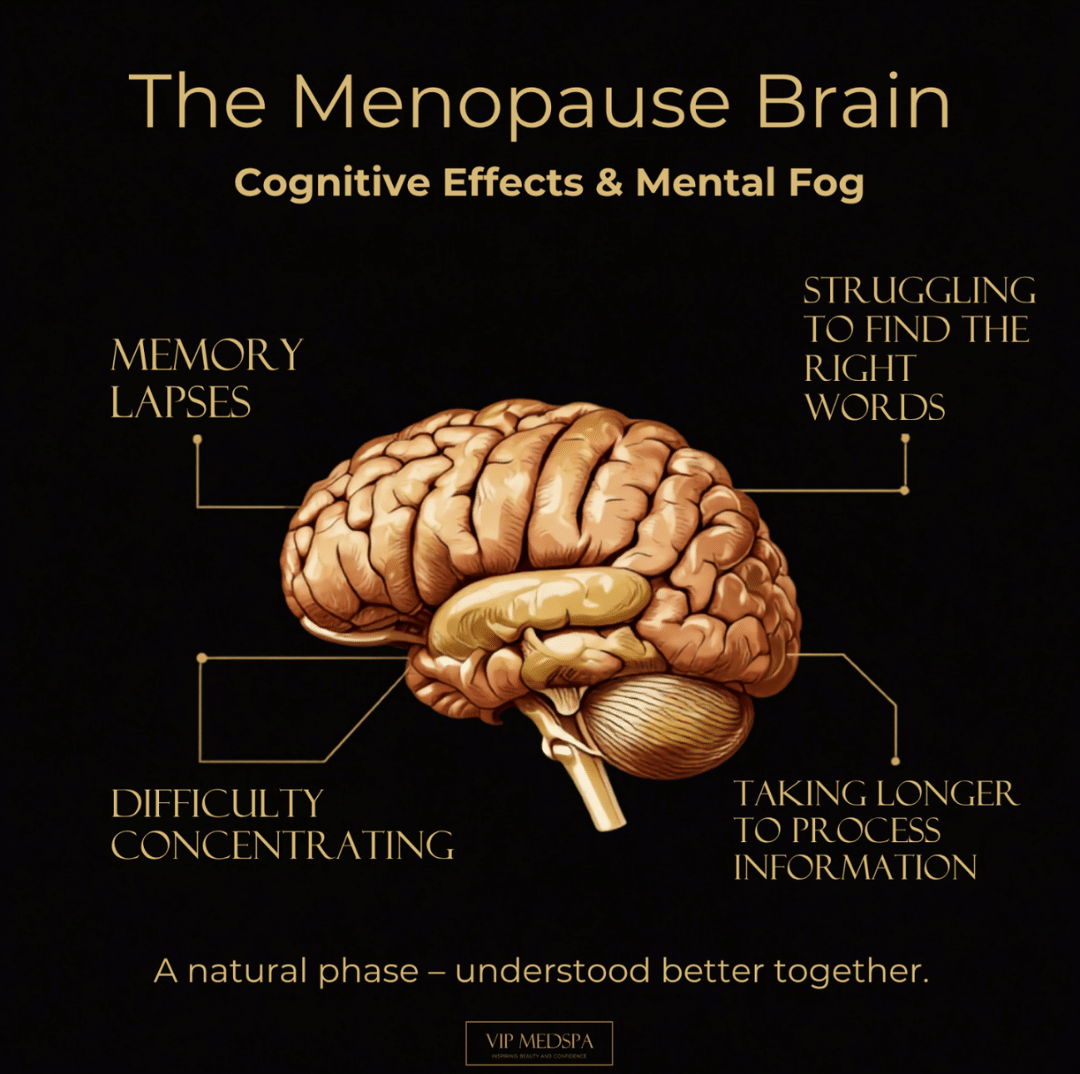
As estrogen levels decline, many women experience:
- Difficulty finding words during conversations
- Reduced concentration
- Forgetfulness
- Mental fatigue
- Reduced multitasking ability
- Increased anxiety
- Lower stress tolerance
These experiences are real physiological manifestations of hormonal change—not simply the consequences of getting older.
Sleep disruption further compounds the problem. Even subtle reductions in sleep quality impair memory consolidation, emotional regulation, insulin sensitivity, and immune function. Over time, poor sleep may contribute to chronic inflammation and accelerated biological aging.
Rather than viewing these symptoms in isolation, we should recognize them as interconnected expressions of a changing neuroendocrine system.
The Hidden Link Between Menopause, Gut Health, & Chronic Inflammation
One of the most exciting areas of current research explores the relationship between menopause and the gut microbiome.
Trillions of microorganisms inhabit the gastrointestinal tract, influencing immune regulation, metabolism, nutrient absorption, neurotransmitter production, and inflammatory signaling. Collectively, these organisms form what is commonly known as the gut microbiome.
Emerging evidence suggests that estrogen and the microbiome exist in a dynamic, bidirectional relationship.
Certain intestinal bacteria—sometimes referred to as the estrobolome—participate in estrogen metabolism by regulating the recycling and excretion of circulating estrogens. As ovarian hormone production declines, changes occur within this microbial ecosystem.
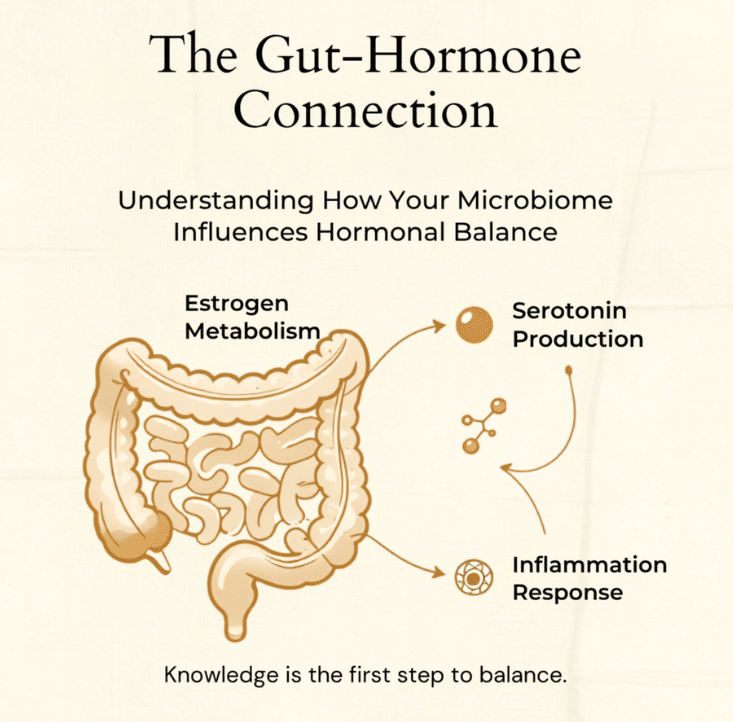
Researchers have observed that menopause is associated with reduced microbial diversity and shifts in bacterial composition. These alterations may contribute to increased intestinal permeability, chronic low-grade inflammation, insulin resistance, and visceral adiposity.
Clinically, women may notice:
- Persistent bloating
- Increased food sensitivities
- Constipation
- Difficulty losing weight
- Reduced energy
- Greater systemic inflammation
Although science continues to evolve, it reinforces an important concept: menopause is not solely a hormonal event. It is a whole-body transition involving the endocrine, immune, metabolic, and gastrointestinal systems.
Supporting gut health through nutrition, resistance exercise, adequate sleep, stress management, and individualized medical care may therefore play an important role in healthy aging.
Menopause is also a Metabolic Transition
Many women become frustrated when the strategies that maintained their weight for decades suddenly stop working.
This is not simply a failure of willpower.
Declining estrogen alters how the body stores fat, regulates insulin, preserves muscle mass, and expends energy.
Body composition changes in several important ways:
- Lean muscle mass gradually declines.
- Resting metabolic rate decreases.
- Visceral fat preferentially accumulates around the abdomen.
- Insulin sensitivity may worsen.
- Appetite regulation becomes less predictable.
These physiological adaptations increase the risk of metabolic syndrome, type 2 diabetes, cardiovascular disease, and fatty liver disease if left unaddressed.
Rather than focusing exclusively on the number on the scale, a physician-led longevity approach emphasizes preserving skeletal muscle, improving metabolic flexibility, reducing inflammatory burden, and maintaining functional independence throughout aging.
The objective is not simply weight loss.
The objective is metabolic resilience.
Menopause is not simply the end of reproductive years—it is a profound biological transition that influences nearly every system in the body. While symptoms such as hot flashes often receive the most attention, many women experience changes in cognition, metabolism, sleep, mood, gut health, cardiovascular risk, musculoskeletal health, and overall vitality that deserve equal recognition.
The encouraging news is that menopause does not have to mark the beginning of decline. Advances in medical research, hormone therapy, metabolic medicine, nutrition, and longevity science have provided women with more evidence-based options than ever before to support healthy aging and improve quality of life.
Every woman’s experience is unique, and there is no single treatment that is appropriate for everyone. The first step is understanding what is happening within your body and working with a qualified healthcare professional to develop an individualized plan based on your medical history, symptoms, goals, and current evidence.
At VIP MEDSPA we believe menopause care extends beyond symptom management. Our physician-led approach focuses on helping women preserve their health, optimize their metabolism, maintain cognitive function, and continue living with confidence through every stage of life.
Whether you are entering perimenopause, experiencing menopause, or simply beginning to notice changes in your health, know that you do not have to navigate this journey alone.
Continue your Wellness Journey
If this article resonated with you, our team would be happy to discuss your symptoms, answer your questions, and determine whether further evaluation or treatment may be appropriate.
We offer physician-led consultations focused on:
- Bioidentical Hormone Replacement Therapy (BHRT)
- Medical Body Optimization
- Longevity Medicine
- Weight Loss
- IV Vitamin Therapy
- Women’s Wellness
- Sexual Health
Schedule your consultation today and discover a personalized approach to healthy aging and lifelong vitality.
We design outcomes.
Book a Confidential Consultation
Location: 99 Sinclair Ave, Georgetown, Ontario